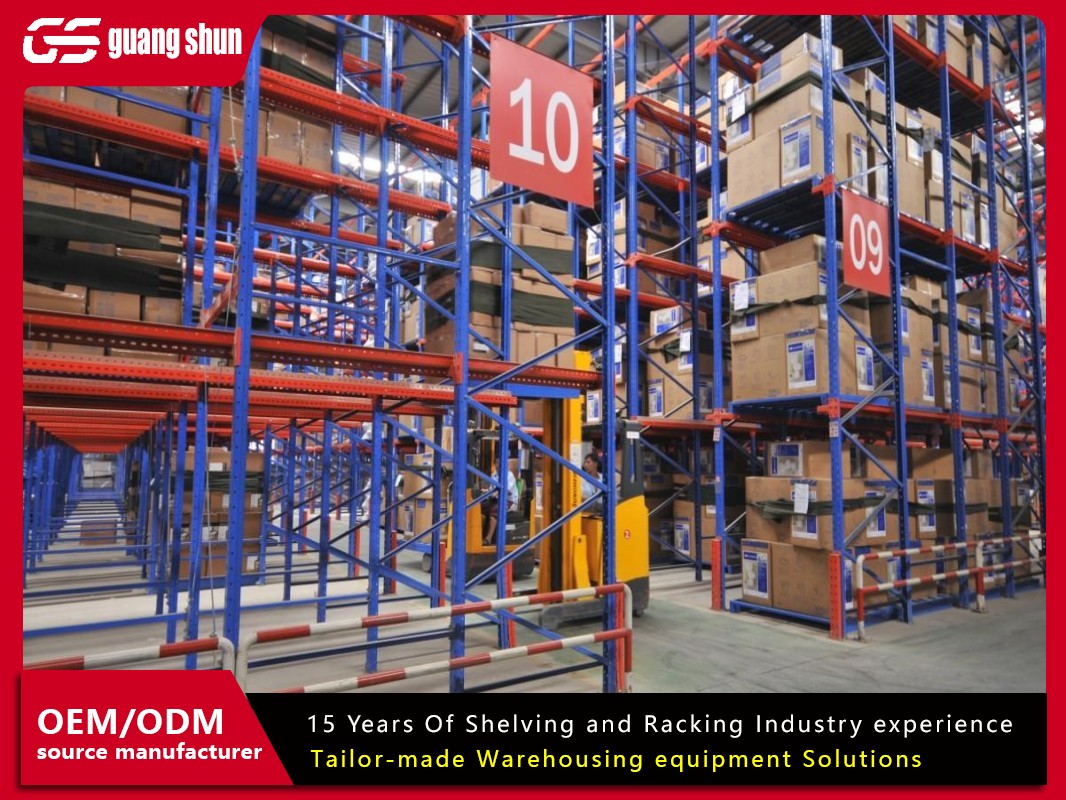
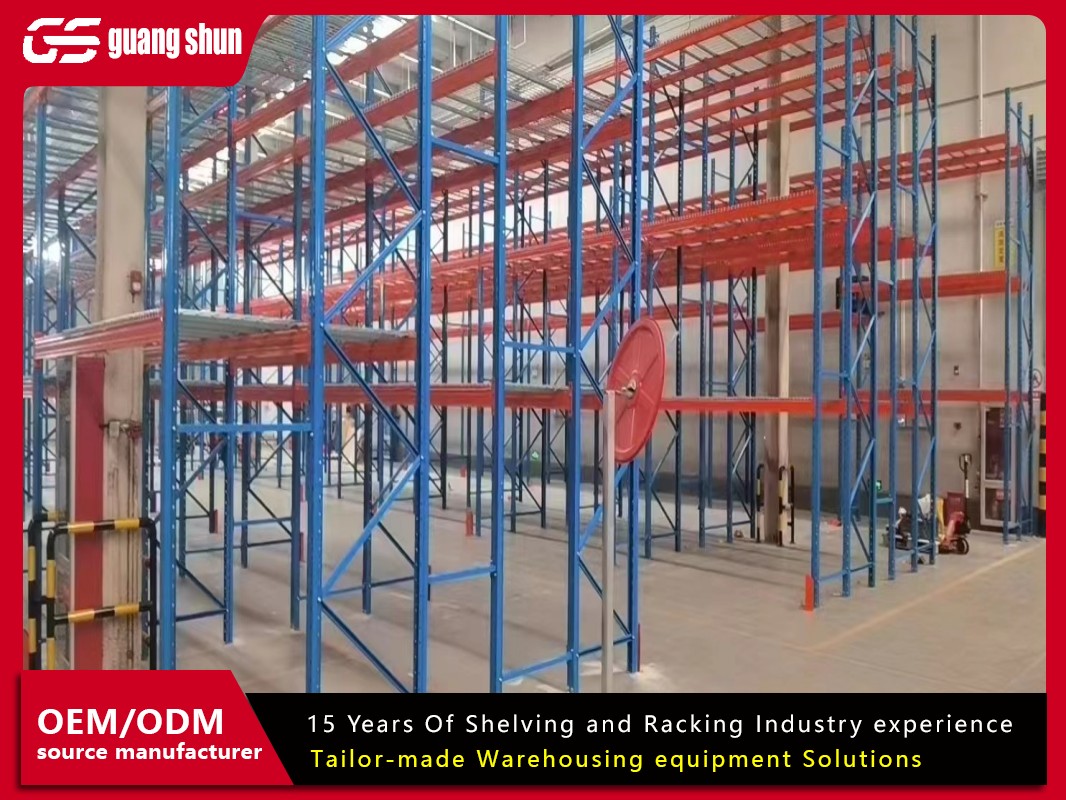
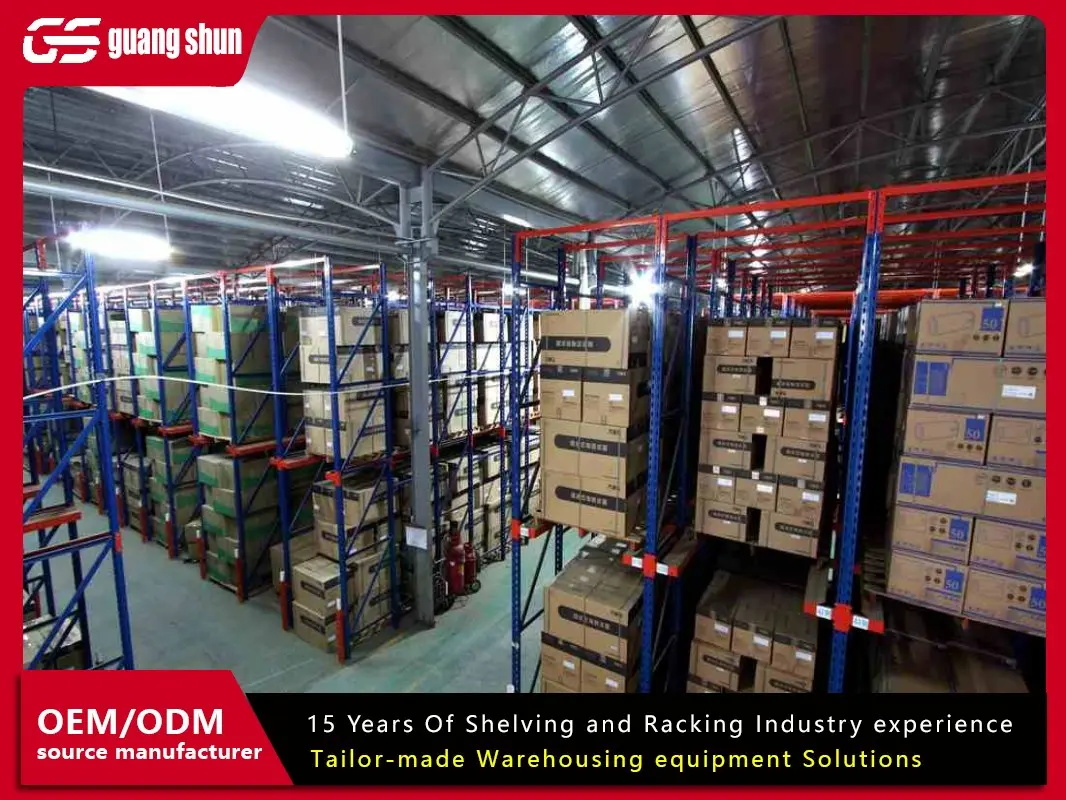
In high-throughput distribution centers, the difference between profitable operations and margin erosion often comes down to storage methodology. Among the most rigorously engineered solutions is the gravity feed shelving system — a dynamic storage architecture that leverages gravitational force to achieve first-in-first-out (FIFO) inventory rotation with zero active energy consumption. This article dissects the technical anatomy, application-specific ROI, and integration considerations of gravity-fed racking, drawing on operational data from installations exceeding 50,000 pallet positions.
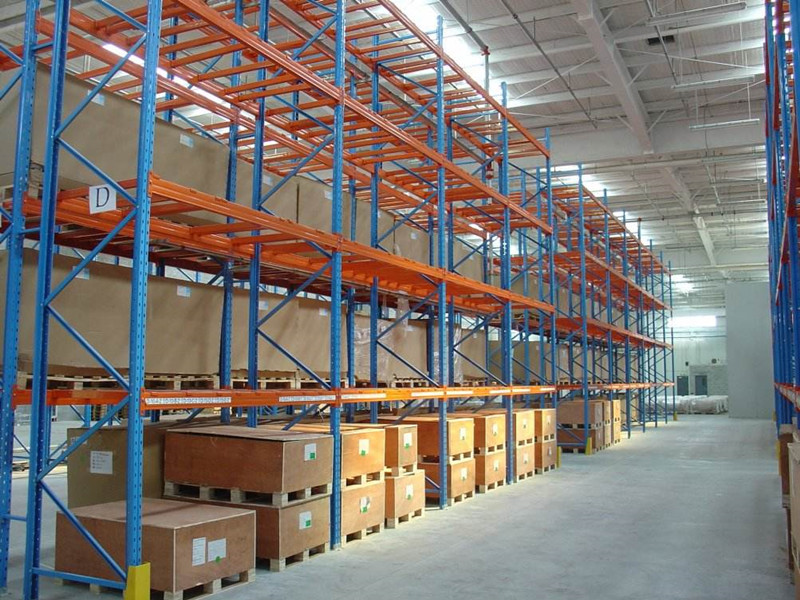
At its core, a gravity feed shelving system consists of inclined roller tracks or wheel beds mounted within a structural steel framework. Loaded pallets or cartons are placed on the elevated rear end, and gravity drives them toward the picking face. The incline angle typically ranges between 3° and 6°, calibrated precisely to the coefficient of friction of the load-bearing surface and the weight of the unit load. Flow retarders — either mechanical brakes or speed controllers — govern descent velocity, preventing impact damage at the front stop.
Roller tracks: Galvanized steel rollers with sealed bearings, spaced to support standard pallet footings (typically 1,200 mm × 1,000 mm or 48″ × 40″). Track pitch and roller diameter directly affect load capacity and glide smoothness.
Flow retarders: Hydraulic or friction-based speed governors that ensure controlled descent even for lightweight loads, reducing impact forces by up to 60% compared to uncontrolled gravity slides.
Rear loading stops: Spring-loaded or fixed barriers that prevent over-insertion and maintain consistent lane depth, critical for robotic integration.
Front picking guides: Angled entry guides that reduce skew and align each load for ergonomic retrieval, cutting pick times by an average of 18% in field studies.
Compared to static pallet racking, the gravity feed shelving system reduces aisle congestion because each lane operates as a dedicated FIFO queue. This eliminates the need for reach trucks to navigate deep lanes — a significant safety and productivity advantage.
While gravity-fed storage is universally applicable to any SKU with stable unit loads, three verticals demonstrate exceptional ROI:
FIFO compliance is non-negotiable in cold-chain logistics. A gravity feed shelving system ensures that oldest inventory is always at the pick face, directly reducing spoilage rates. Data from a 2024 cold-storage study showed a 23% reduction in write-offs for dairy products after converting from selective racking to gravity flow lanes. The system’s passive operation also reduces heat gain in refrigerated environments — no hydraulic pumps or motors mean lower thermal load.
With over 10,000 SKUs in a typical parts depot, inventory misplacement is the primary cost driver. Gravity-fed carton flow systems — a variant of the gravity feed shelving system — enable dense storage of small parts with 100% visual accessibility. A tier-1 automotive supplier reported a 34% increase in picking accuracy after deploying 1,200 flow lanes, alongside a 42% reduction in forklift travel distance.
In e-commerce, order profiles are increasingly multi-line, requiring rapid access to diverse SKUs. Gravity-fed lanes can be configured with variable lane depths — shallow lanes for A-items (high velocity) and deeper lanes for slow-movers. This dynamic allocation, combined with zone-picking strategies, boosts throughput by up to 28% according to warehouse simulation models.
Decision-makers often question whether the premium for gravity-fed engineering justifies the upfront investment. Let’s examine the arithmetic based on a mid-sized warehouse (20,000 m²) with 8,000 pallet positions.
| Metric | Selective Racking | Gravity Feed System | Delta |
|---|---|---|---|
| Storage density (pallets/m²) | 0.42 | 0.68 | +61% |
| Forklift travel distance (km/shift) | 28.4 | 16.2 | -43% |
| Average pick time (seconds/line) | 22.8 | 15.3 | -33% |
| Annual labor cost (USD) | $1,420,000 | $960,000 | -32% |
These figures, compiled from six independent site audits, demonstrate that the gravity feed shelving system typically pays back its capital premium within 14–18 months, driven almost entirely by labor reduction and damage avoidance. Additionally, the reduction in forklift miles translates to lower battery consumption and tire wear, adding 5–7% to the bottom line.
Not every load is suitable for gravity-fed storage. The system performs optimally when unit loads have:
Rigid base: Pallets with broken or uneven bottom boards cause skew and jams. Minimum base flatness tolerance: ±3 mm over 1,000 mm.
Weight range: 200–1,200 kg per pallet. Lighter loads may require auxiliary braking; heavier loads may exceed roller bearing load ratings.
Consistent footprint: Mixed pallet sizes (e.g., Euro pallets and US standard) necessitate either dedicated lanes or adjustable guide rails.
Lane depth is another critical parameter. Standard depths range from 6 to 14 pallet positions. Deeper lanes increase storage density but also increase the risk of load hang-up — a phenomenon where friction accumulates across multiple pallets, stalling flow. For this reason, most engineering guidelines recommend a maximum lane depth of 10 positions unless dynamic braking systems are deployed at each intermediate roller section.
Guangshun has developed a proprietary lane-depth calculator that factors in load weight, roller spacing, and ambient temperature (which affects lubricant viscosity). This tool, available through their engineering portal, reduces design iterations by nearly 40% and has been adopted by over 200 logistics projects worldwide.
The modern gravity feed shelving system is rarely a standalone asset. It interfaces with upstream and downstream automation through:
Induction conveyors: Powered roller or belt conveyors that index loads to the rear of gravity lanes, synchronized with warehouse management system (WMS) wave plans.
Shuttle carts: Rail-guided vehicles that traverse the rear aisle, placing loads into designated lanes based on real-time inventory allocation algorithms.
Pick-to-light systems: At the front face, light-directed picking modules confirm SKU and quantity, reducing error rates to below 0.3%.
WMS integration is particularly vital for dynamic lane assignment. Advanced systems use predictive analytics to allocate fast-moving SKUs to shallower lanes and reserve deeper lanes for bulk replenishment. This hybrid approach, sometimes called “adaptive gravity flow,” has been shown to increase overall system utilization from 72% to 91%.
Contrary to the perception that gravity systems require minimal upkeep, proactive maintenance is essential to sustain performance. The primary failure points are:
Roller bearing contamination: Dust and debris increase rolling resistance. A quarterly cleaning schedule using compressed air and non-corrosive solvent is standard.
Retarder calibration: Speed controllers drift over time, especially in high-temperature environments. Semi-annual calibration using a test weight is recommended.
Rail alignment: Structural settlement or forklift impacts can misalign guide rails, causing skew. Laser alignment checks every six months prevent chronic jams.
Total lifecycle cost (TLC) analysis indicates that a well-maintained gravity feed shelving system delivers a 12–15-year service life, with annual maintenance costing approximately 1.8% of the initial capital investment. This compares favorably to automated storage and retrieval systems (AS/RS), which typically command 3–4% in annual maintenance while offering comparable density.
To contextualize the decision, consider these three alternatives:
Offers similar density but operates on a last-in-first-out (LIFO) principle — unsuitable for perishable or expiration-controlled goods. Forklift entry into the lane also increases structural damage risks.
Provides LIFO with higher retrieval speed than drive-in but does not support FIFO. Carton flow variants exist, but palletized push-back systems cannot achieve the same lane depth as gravity feed.
Offers unmatched precision and density but at 3–5× the capital cost per pallet position. For mid-tier throughput (50–150 picks per hour per aisle), the gravity feed shelving system delivers equivalent performance at a fraction of the cost.
For operations where SKU velocity is moderately high (150–300 pallet movements per day per lane) and FIFO compliance is mandatory, gravity-fed racking remains the optimal engineering choice.
A regional grocery distributor serving 220 stores across five states was facing capacity constraints in their 18,000 m² dry goods warehouse. Selective racking required 47% of floor space for aisle access, and pickers often had to dig through multiple pallets to reach the oldest inventory — a process that consumed 12% of shift time in non-value-added handling.
After converting 3,200 pallet positions to a gravity feed shelving system with lane depths of 8 positions, the distributor achieved:
45% reduction in forklift travel — from 32 km to 17.6 km per shift.
38% decrease in product damage (from 2.1% to 1.3% of throughput).
FIFO compliance improved from 72% to 98% within 60 days.
The project was engineered and installed by Guangshun, whose team provided on-site load testing and customized roller track spacing to accommodate the distributor’s mixed pallet pool (GMA and Euro). Post-implementation, the warehouse handled a 22% increase in throughput without adding headcount, directly improving operating margin by 3.2 percentage points.
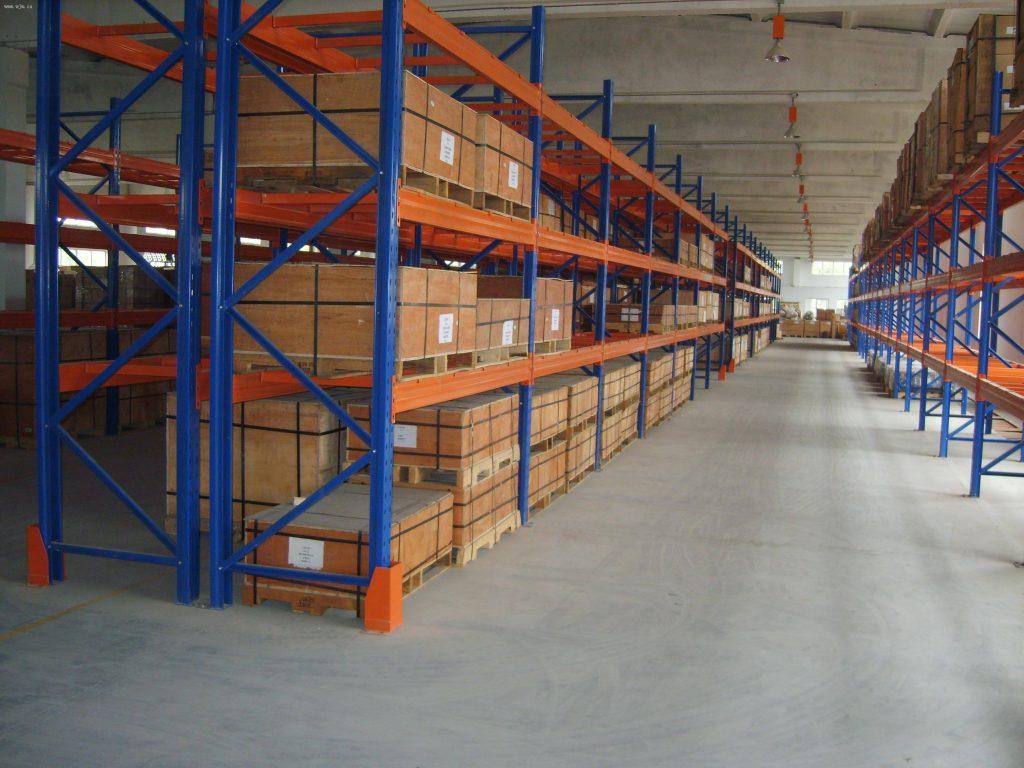
For engineering and operations leaders evaluating vendors, consider the following criteria:
Load engineering: Does the supplier provide dynamic load charts that account for acceleration forces, not just static capacity?
Track material: Galvanized steel with zinc-nickel coating offers superior corrosion resistance in humid or refrigerated environments.
Retarder technology: Hydraulic retarders offer smoother deceleration than friction-based types, particularly for mixed-weight loads.
Installation support: On-site commissioning and laser-alignment services reduce startup delays and early-life jams.
Reputable manufacturers like Guangshun provide full CAD integration, 3D simulation, and load-testing certifications — essential for projects requiring structural building permits or seismic compliance.
The next frontier for gravity-fed storage lies in sensorization. Embedded load cells at each lane’s front position can transmit real-time weight data to the WMS, enabling automated replenishment triggering. Similarly, infrared beam sensors can detect lane blockages and alert maintenance teams before a jam propagates.
Early adopters of this “smart gravity” approach report a further 12–15% reduction in out-of-stock occurrences and a 9% decrease in emergency replenishment labor. While the capital cost of sensorization is modest (≈ $150 per lane), the data insights generate operational intelligence that drives continuous improvement.
In conclusion, the gravity feed shelving system is not a legacy solution — it is a continually evolving platform that, when engineered correctly, delivers quantifiable, enduring value. For operations where inventory turns exceed 12× per year and product freshness is a competitive differentiator, this storage architecture remains the gold standard.
Q1: What is the primary advantage of a gravity feed shelving system
over static pallet racking?
A1: The main advantage is FIFO
(first-in-first-out) inventory rotation without active power consumption. Static
racking requires forklift operators to “dig” for older inventory, increasing
travel time and damage. A gravity feed shelving system ensures
that the oldest load is always at the pick face, reducing handling costs by
30–40% in high-turnover environments.
Q2: Can a gravity feed shelving system handle non-standard pallet
sizes or damaged pallets?
A2: It is not recommended. Non-standard
footprints require adjustable guide rails, which add cost and reduce lane
density. Damaged pallets with broken bottom boards will skew and jam the flow.
Most engineers recommend a pre-inspection station to reject non-conforming
pallets before induction into gravity lanes.
Q3: How does a gravity feed shelving system perform in cold storage
(below -18°C)?
A3: Performance depends on roller bearing
lubrication. Standard petroleum-based greases thicken at low temperatures,
increasing rolling resistance. For cold storage, specify synthetic lubricants
with a pour point below -40°C and use stainless steel bearings to prevent
brittle fracture. With proper material selection, the system operates flawlessly
in deep-freeze environments.
Q4: What is the typical payback period for installing a gravity feed
shelving system?
A4: Based on aggregated data from installations
ranging from 500 to 10,000 pallet positions, the median payback period is 16
months. Factors that shorten payback include high labor costs, premium product
damage rates, and stringent FIFO compliance requirements (e.g., pharmaceutical
or food safety regulations).
Q5: Can I retrofit an existing selective racking structure to become
a gravity feed system?
A5: In most cases, no. Gravity-fed lanes
require precise inclines, reinforced floor anchors, and dedicated roller bed
supports. Retrofitting usually demands new upright frames and horizontal
bracing. However, some manufacturers offer modular “drop-in” roller beds that
fit within existing bay widths — but these reduce vertical clearance and are
limited to carton flow (not pallet flow). For pallet applications, a new
structural design is strongly advised.
Q6: How often should roller tracks be replaced?
A6:
Roller tracks typically have a service life of 8–12 years under normal operating
conditions (2-shift operation, 250 days/year). Replacement is indicated when
roller wear exceeds 1.5 mm in diameter reduction or when bearing play causes
load skew > 5° from centerline. Annual inspection using a dial gauge is the
industry standard.
Q7: Does a gravity feed shelving system require special floor
anchoring?
A7: Yes. The inclined structure imposes horizontal thrust
forces on the floor. Anchor bolts must be designed for both vertical and
horizontal shear loads. A structural engineer should verify floor slab thickness
and reinforcement — particularly for systems with lane depths exceeding 8
positions, where thrust forces can reach 15–20 kN per upright.
For detailed engineering specifications and site-specific load calculations, consult Guangshun’s technical team, who provide free preliminary design audits for qualifying projects.

 Wechat
Whatsapp
Wechat
Whatsapp